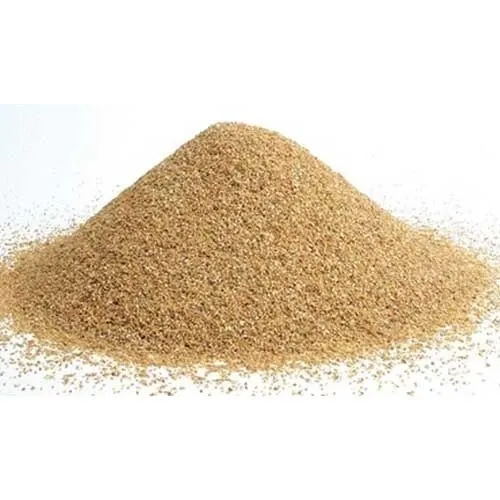
Zircon sand

Zircon, also known as zircon silicate (ZrSiO4), is found in ancient mineral sand deposits. In the form of crystal sands, zircon is typically brown, but could also vary from colourless to yellow-golden, pink and red to blue and green.

Zircon is one of the two core product streams from ‘mineral sands’, the other being titanium minerals (ilmenite, leucoxene and rutile).

The majority of zircon sand is mined in Australia and the African continent. Current annual global production is in excess of one million tonnes. Almost half of the zircon produced globally is consumed by China, with other significant consuming regions including Europe, North America, Asia-Pacific and India.

The main use of zircon sand is its conversion into flour, opacifier, fused zirconia, zirconium chemicals, chemical zirconia and zirconium metal. Zircon sand is directly used in foundry applications and refractories and other minor applications.

Category:

Zircon sand (ZrSiO4) is a naturally occurring mineral, used in many strategic industries. The largest global deposits are found in Australia, S. Africa but with smaller volumes in India, S.Asia, China, and W & E Africa. Zircon sand can be used directly in certain foundry applications or fine milled to produce Zircon flour.

Zircon is mainly consumed as an opacifier, and has been known to be used in the decorative ceramics industry. It is also the principal precursor not only to metallic zirconium, although this application is small, but also to all compounds of zirconium including zirconium dioxide (ZrO2), one of the most refractory materials known.

Other applications include use in refractories and foundry casting and a growing array of specialty applications as zirconia and zirconium chemicals, including in nuclear fuel rods, catalytic fuel converters and in water and air purification