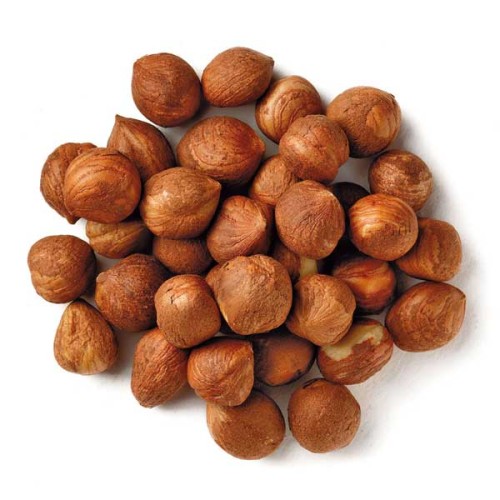
Health Benefits
The heart-healthy monounsaturated fats found in hazel nuts have been shown in numerous studies to help improve blood lipid numbers.
Interesting Facts About Hazel Nuts
- Over 99% of North American cultivated hazel nuts come from Oregon, as well as the Fraser Valley in British Columbia
- Over 75% of the worldwide production of hazel nuts originates in Turkey
- Filberts and cobnuts are the two varieties of hazelnuts, which differ only in shape
Storage Tips for Maximum Shelf Life
Store shelled hazel nuts in a sealed container in the refrigerator for 6-12 months.
How to Enjoy
Enjoy hazel nuts by the handful either raw, or lightly roasted. Here are a few ways to enjoy them:
- Grind and add to cereals, yogurts and other food dishes
- Blend in to a rich, creamy nut butter
- Roast and dip in chocolate
- Grind, and add to cakes, muffins, cookies, and other baked goods